 No. 104Pet & Primal Play
Enter your pet space and wait there quietly until your Handler returns or releases you.
Task No. 104 of 282
Wait in Your Cage
Enter your pet space and wait there quietly until your Handler returns or releases you.
What it is
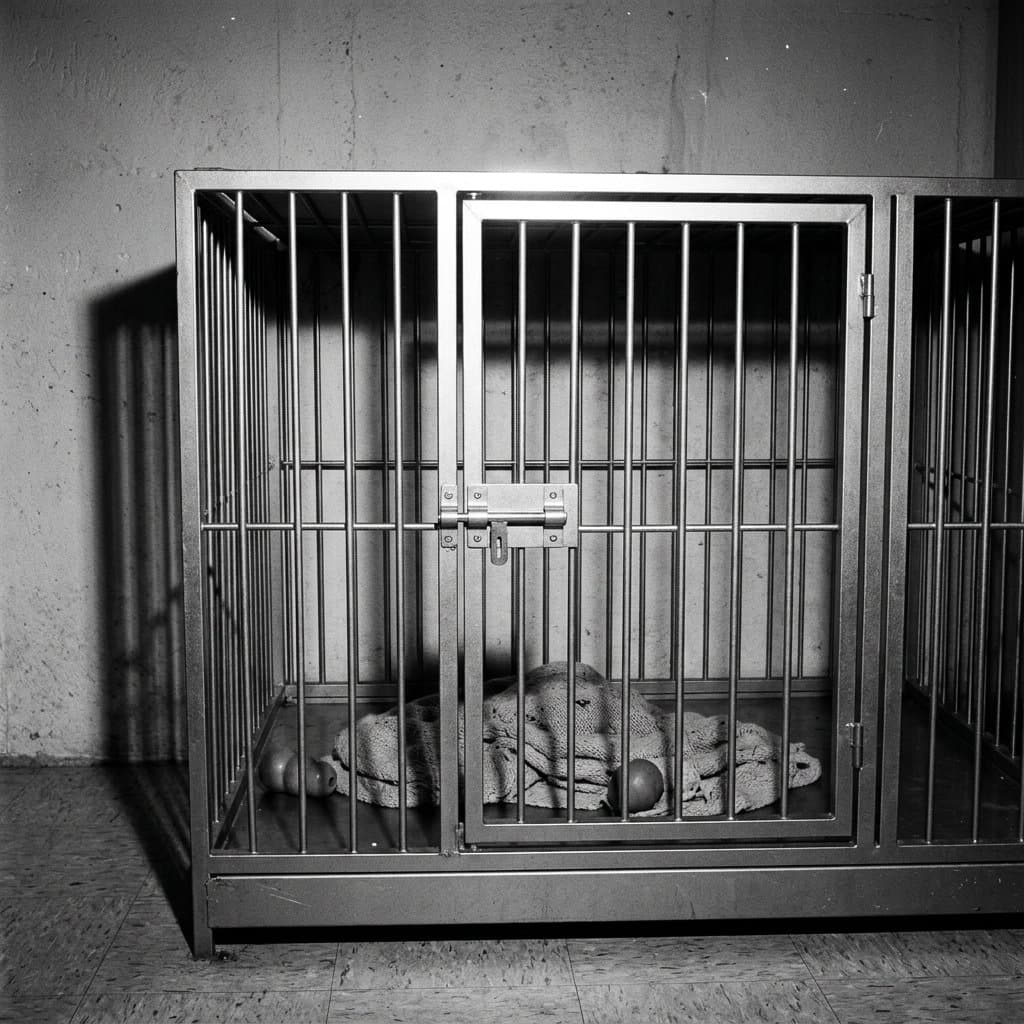
The pet enters the assigned cage, crate, pen, or den-like space and waits there until the Handler returns or gives the release cue. The space may contain a pet bed, blanket, water, or toy, but it must remain ventilated and immediately accessible. This task is a supervised pet-place command, not permission to lock someone away unattended or during actual sleep.
Why it is submissive
The Handler decides where the pet belongs and when the pet may leave that place. The pet accepts the boundary, settles, and waits instead of following the Handler or choosing another location. Release remains an action granted by the Handler.
Why people may like it
A cage or pet space can feel like a private den rather than simple restraint. Some pets enjoy being put away, waiting quietly for the Handler, or knowing that the space belongs specifically to their animal role. The defined boundary may feel comforting, possessive, lonely in an exciting way, or deeply cared for. Handlers may enjoy returning to find the pet exactly where they were told to stay.
Ways to run it
- Open-Door Crate Stay
- The pet remains inside an open crate or pen until the release cue.
- Short Closed-Door Wait
- The door is closed briefly while the Handler stays present and can open it immediately.
- Pet Bed Inside
- A comfortable bed or mat makes the assigned space feel like the pet’s own den.
- Stay With a Toy
- The Handler gives the pet one safe toy or comfort object while they wait.
- Release and Praise
- The Handler calls the pet out and rewards calm waiting with praise or affection.
How this task works
Wait in Your Cage is a scene task from the pet & pony play chart. This is an in-person task — it needs you and your Dom in the same room. It's a kink task — charged with power exchange, though not explicit.
Intermediate: best once you've built trust, protocol, and a track record together. Risk level is heightened — negotiate carefully, agree on stop signals, and plan aftercare before you start.