What Is BDSM Journaling? A Guide for Doms, Subs, and Couples
BDSM journaling is a way to write about your experiences, desires, boundaries, scenes, roles, and relationship within a BDSM or D/s dynamic.
It can be private or shared with a partner. Some people write after a scene or when something is on their mind. Others make journaling a regular part of their dynamic through daily check-ins, weekly reflections, or entries assigned by a Dominant.
What makes BDSM journaling different from keeping an ordinary diary is what you are using it to explore. You might write about how submission has been feeling lately, a fantasy you have not talked about yet, whether a rule is still working for you, or something from your last scene that you keep thinking about.
At its best, BDSM journaling creates more space to understand yourself and communicate with your partner.

Why Do People Keep BDSM Journals?
D/s relationships can involve subjects that are easy to leave unspoken. Partners may need to communicate clearly about authority, desires, limits, scenes, and how the power exchange itself is affecting them.
Research on long-term BDSM couples reflects this. In one qualitative study, communication was the most consistently mentioned relationship value. Participants described a high value on openness and disclosure, including communicating changes in BDSM interests as they discovered them.
Journaling gives those thoughts somewhere to go.
People may use a BDSM journal to:
- Understand what they want. Writing can help turn a vague feeling into something more specific.
- Communicate with a partner. A shared entry can bring up something that may not have surfaced in ordinary conversation.
- Process an experience. Scenes, tasks, rules, and other parts of a dynamic can be easier to understand after reflecting on them.
- Explore fantasies without committing to them. Writing about something does not mean you want to do it.
- Notice change over time. Interests, limits, and feelings about the dynamic do not necessarily stay the same.
You do not need a bigger reason than having something you want to think about.
What Is a Submissive Journal?
A submissive journal focuses on the submissive's experience of their role and dynamic.
A sub might write about an instruction that affected them more strongly than expected, something they found difficult, a moment when they felt especially submissive, or something they wish their Dom understood better.
The value is often in capturing what cannot be seen from the outside.
A Dom may know that a task was completed. They cannot automatically know that the sub loved doing it, resented part of it, wished it had been harder, felt especially proud afterward, or discovered something new about themselves in the process.
A submissive journal can give the Dom more insight into that inner experience when the journal is shared.
It can also remain completely private. Being submissive does not mean giving up the right to private thoughts.
Doms Can Journal Too
BDSM journaling is not only for submissives.
Dominance comes with its own experiences worth reflecting on. A Dom may want to think about how they are leading, what they are noticing in their sub, whether an expectation is working, or how their own desires are changing.
A Dominant might write about a scene they planned, why a particular form of service matters to them, something they want to introduce into the dynamic, or a decision they would handle differently next time.
Journaling can also be useful for separating the idea of what a Dominant is “supposed” to be from the kind of Dominant you actually want to become.
Should a BDSM Journal Be Private or Shared?
Both can be useful, but they serve different purposes.
A private BDSM journal gives you space to think without immediately turning every thought into a conversation. You can be uncertain. You can explore a fantasy without deciding that you want it. You can write something and change your mind about it later.
A shared BDSM journal becomes another way for partners to communicate. Writing can sometimes make it easier to express something that is difficult to introduce face-to-face, especially when the writer wants time to choose their words.
You can also do both. Some entries may be written specifically for your partner, while others remain yours.
The important part is knowing what the expectation is. A journal should not quietly shift from private to shared because one partner assumes they are entitled to read it.
What Should You Write in a BDSM Journal?
There is no required format. You can write about anything that helps you better understand yourself, your partner, or your dynamic.
Your D/s Relationship
Sometimes the most useful subject is the dynamic as a whole.
You might reflect on whether you have been feeling connected, whether you want more structure, or whether something about the relationship has started to feel different.
Questions that can help:
- How has our D/s felt lately?
- What do I want more of from my partner?
- Is anything feeling less satisfying than it used to?
- When have I felt closest to my partner recently?
- Is there something I have been avoiding talking about?
Dominance and Submission
Your role can mean different things at different times in your relationship.
Writing can help you understand what actually makes dominance or submission meaningful to you.
You might explore when you feel most connected to your role, what kind of authority affects you most, what makes obedience satisfying, or which parts of your role still feel uncertain.
This can be especially useful because BDSM interests are not necessarily static. Participants in the long-term couples study often described BDSM exploration as an ongoing process and expected their interests to continue changing.
Desire and Fantasies
A journal can be a low-pressure place to admit what you want.
You might write out a fantasy in detail, explore why it appeals to you, or think about whether you actually want to experience it outside your imagination.
You could write about:
- a fantasy you keep returning to
- something you want your partner to initiate
- a kind of control that particularly affects you
- something you are curious about but unsure whether you want to try
- a desire you have found difficult to say out loud
Writing about a fantasy is not consent to act on it. Sometimes understanding the fantasy is the entire point.
Consent and Limits
Limits can change.
Something you once considered a definite no may become interesting. Something you used to enjoy may stop feeling right. A situation that works with one partner or under one set of conditions may not work under another.
A journal can help you notice those changes before you have fully worked out what they mean.
You might write about whether a boundary has shifted, what conditions would make something feel safe enough to explore, or whether there is anything you want your partner to handle differently.
Clear communication about boundaries and desires is particularly important in BDSM, where negotiation can continue before, during, and after play. A 2024 study of BDSM and non-BDSM participants found that BDSM participants reported more direct communication about sex, while also emphasizing the role of explicit negotiation and consent within BDSM culture.
Rules, Habits, and Service
If your dynamic includes recurring expectations, journaling can capture the experience behind them.
Maybe a rule makes you feel more submissive than you expected. Maybe a service habit that once felt meaningful has become mechanical. Maybe you are proud of how consistent you have become.
Instead of only recording whether something happened, write about what it is doing for the dynamic.
That can help both partners understand which forms of structure actually matter and which ones may need to change.
Your Relationship Outside BDSM
Your D/s does not exist separately from the rest of your relationship.
Affection, conflict, insecurity, work stress, closeness, or frustration can all affect how dominance and submission feel.
A BDSM journal can therefore contain completely ordinary relationship thoughts too.
If you have felt distant from your partner all week, that may be more important to write about than anything kinky that happened.
Journaling After a BDSM Scene
After a scene is one of the most natural times to journal.
You may know immediately that you loved something without understanding why. You may have mixed feelings. Something that seemed minor during the scene may keep returning to you afterward.
Writing can help preserve those reactions before they fade.
You might ask yourself:
- What was my favorite moment?
- Did anything surprise me?
- Was there a point when I felt especially dominant or submissive?
- Did anything pull me out of the scene?
- What would I want differently next time?
- Did I get what I needed afterward?
The goal is not to grade the scene.
It is to learn from it.
If you journal after several scenes, patterns may also become easier to see. You may notice that the same kind of instruction consistently affects you, that you keep wanting more anticipation, or that something you enjoy fantasizing about is less interesting when you actually do it.
Use Questions When You Don't Know What to Write
The blank page is often the hardest part.
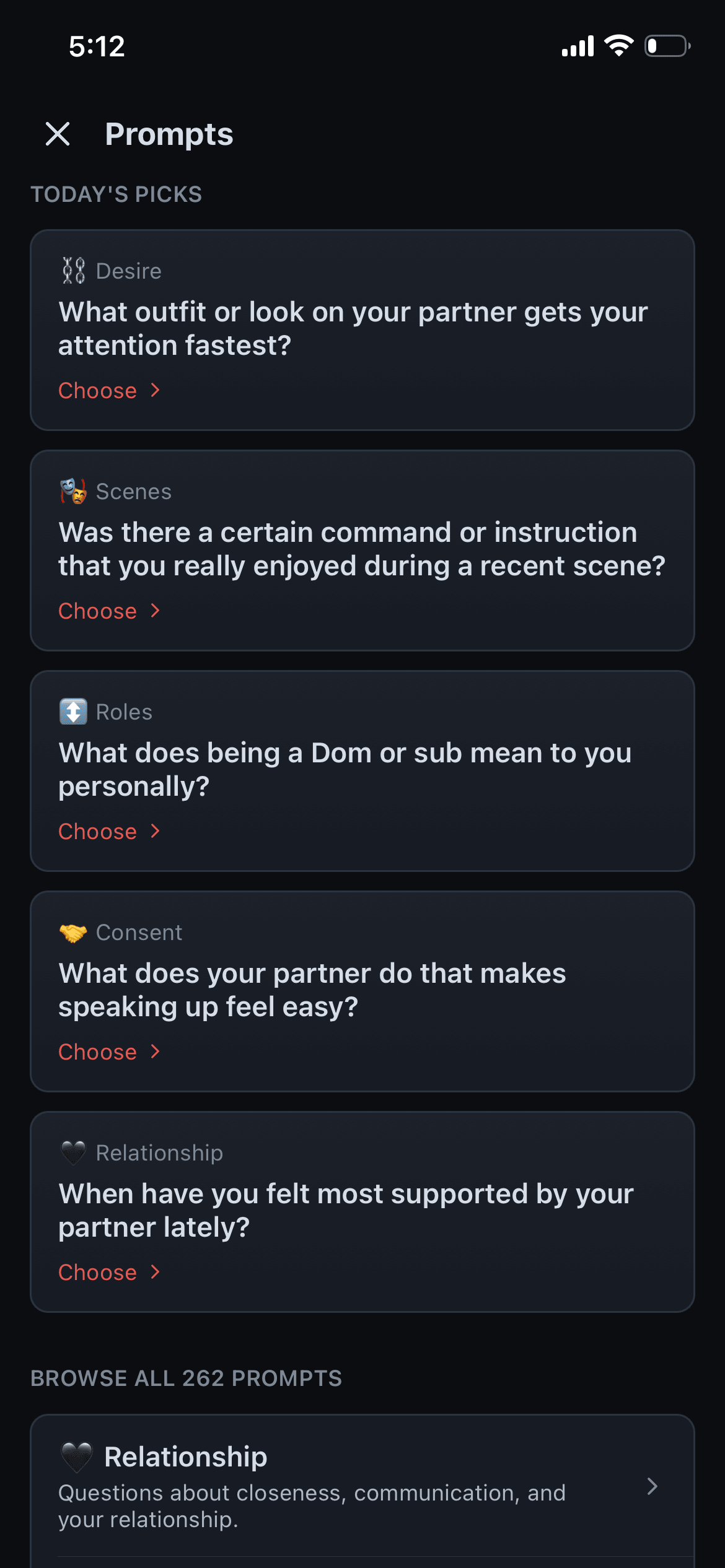
A good question gives you somewhere specific to begin.
For example:
What do you need more of from me right now?
What fantasy do you keep coming back to?
When do you feel most connected to your role?
Is there a limit you want to revisit?
What was your favorite moment from our last scene?
What makes authority feel trustworthy to you?
Questions can be particularly useful because they start conversations that might not otherwise happen.
You may never spontaneously ask your partner how their relationship to submission has changed over the past year. Put the question in front of them, though, and they may immediately have an answer.
The best BDSM journal prompt is not necessarily the deepest or most provocative one.
It is the one that makes you realize you have something you want to say.
If you are a Dominant and you want a structured place to start, these 30 submissive journal prompts give you one question a day for a month, ordered so the easy ones come first.
How Often Should You Journal?
There is no correct schedule.
Some people journal whenever something feels worth writing about. Others make it part of their D/s routine.
Daily journaling can work well for short check-ins or for a submissive who regularly shares their day with their Dom.
Weekly journaling creates more distance and can be useful for looking at how the dynamic felt overall, what you wanted more of, or what you learned about your partner.
Monthly journaling works well for slower-moving subjects such as limits or whether the structure of the dynamic still feels right.
You can also journal only after scenes or important experiences.
The useful schedule is the one that keeps producing something worth writing.
BDSM Journaling Can Become Part of the Dynamic
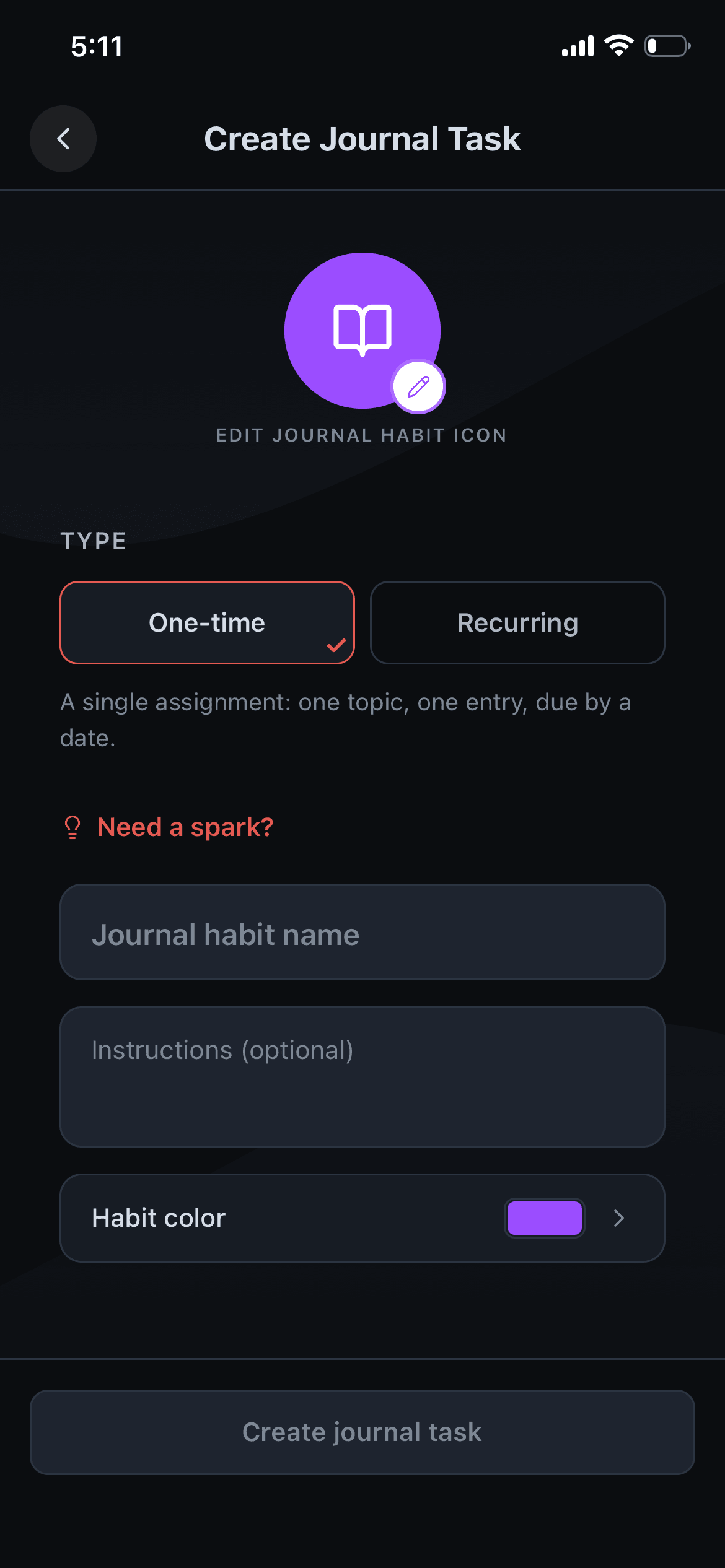
For some couples, journaling is not just reflection. The journal itself becomes part of their D/s.
A Dom might expect an evening entry from their sub. A couple might reflect on their dynamic every Sunday. A submissive might disclose a new fantasy each week.
If you would rather try a ready-made structure than design one, the Seven Days of Honest Submission challenge is a week of daily writing prompts built around exactly this.
This can make journaling feel very different from keeping a normal diary. Writing becomes part of the structure of the relationship and another way for the sub and Dom to communicate.
If journaling becomes an expectation, agree on what that actually means.
How often is the person expected to write? Is every entry shared? Can they keep private entries too? What happens on a day when they genuinely have nothing to say?
A journal works best when it encourages honesty rather than producing words simply because an assignment is due.
BDSM Journaling and Communication
One of the biggest reasons to journal is simple: it creates another way to communicate.
Not everything important comes up during a formal conversation.
A thought may occur while completing a task. You may realize days after a scene that something affected you more than you initially thought. A fantasy may sit in your head for months because you have never found a natural moment to introduce it.
Writing captures those things before they disappear.
It also gives you time to think.
Instead of trying to explain a complicated feeling while you are still working it out, you can find the words first. Instead of expecting your partner to know which questions to ask, a journal can show them something they did not know was there.
That does not mean journaling should replace direct communication. If something needs a conversation, you still need to have it.
Journaling simply creates more opportunities for that conversation to begin.
BDSM Journaling in Collared
Collared includes BDSM journaling inside the same app Doms and subs use for the rest of their dynamic.
You can write privately or share entries with your partner. Collared also includes daily BDSM questions designed to spark conversations that might not otherwise happen, dedicated mood tracking, recurring check-ins, and Journal streaks.
The questions cover Relationship, Desire, Consent, Scenes, and Roles, with everything from light questions to deeper reflections about fantasies, boundaries, dominance, and submission.
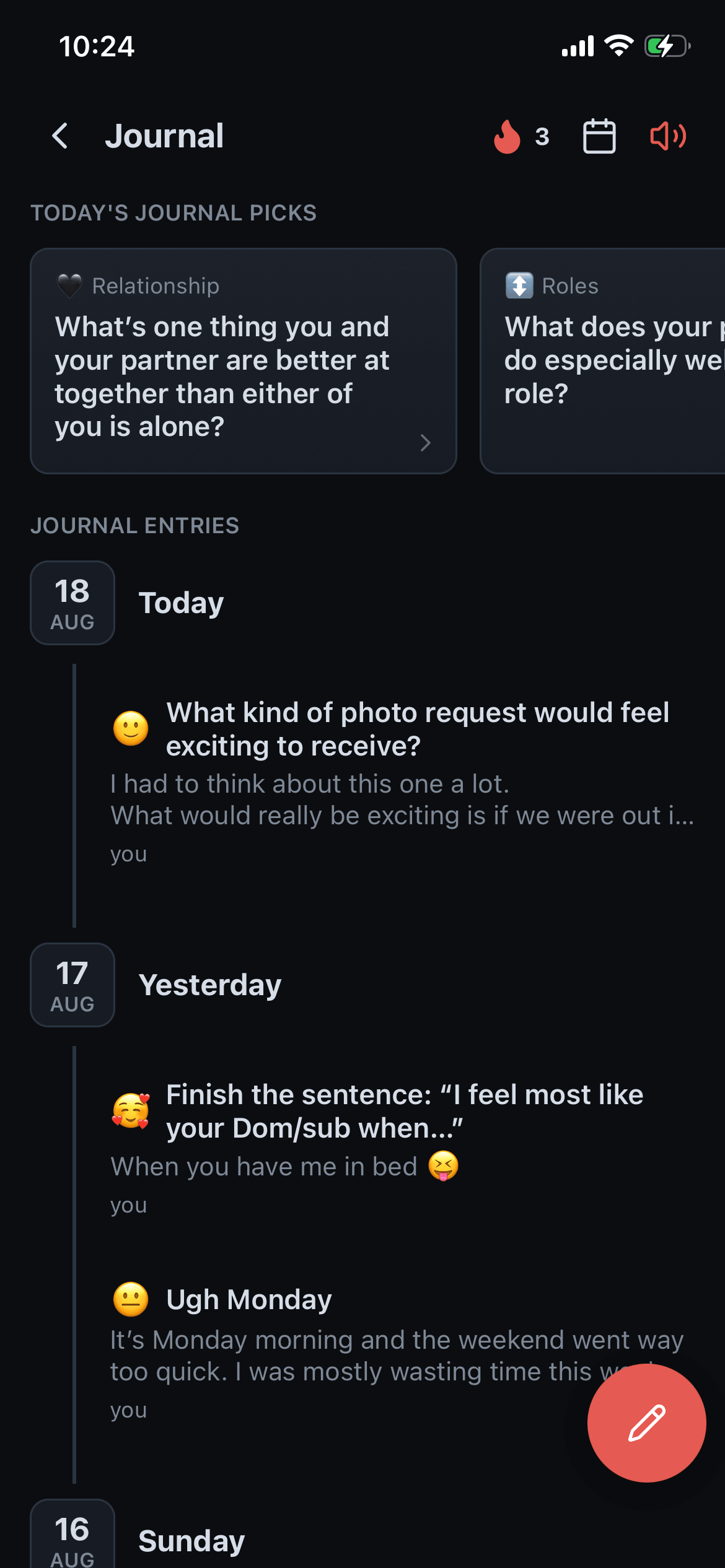
You might use Collared for an evening check-in, a private thought after a scene, a weekly reflection on your D/s, or simply a question that makes you realize there is something your partner should know.
The goal is not to document every moment.
It is to give both partners more ways to understand themselves and each other.
Frequently Asked Questions
What is BDSM journaling?
BDSM journaling is writing about your experiences, desires, boundaries, scenes, roles, or relationship within a BDSM or D/s context. It can be private, shared with a partner, used after scenes, or made into a recurring part of the dynamic.
What should a submissive write in a journal?
A submissive can write about how submission feels, tasks or rules, fantasies, boundaries, scenes, things they find difficult, things they are proud of, and anything they want their Dom to understand.
Is BDSM journaling only for submissives?
No. Doms can journal about their role, desires, decisions, scenes, responsibilities, and what they are noticing in the dynamic. Couples can also keep shared journals.
Should my Dom read my journal?
Only if you have agreed that the journal is shared. Some submissives intentionally journal for their Dom, while others keep their writing private. You can also share some entries and keep others to yourself.
How often should I keep a BDSM journal?
As often as it is useful. Some people write every day, while others journal weekly, after scenes, or only when something important comes up.
What are good BDSM journal prompts?
Good BDSM journal prompts give you something specific to reflect on about your relationship, desires, consent, scenes, or role. Questions like “What do you need more of from me right now?” or “When do you feel most connected to your role?” can make it easier to start writing.
Try BDSM Journaling in Collared
If you want a BDSM journal built specifically for Doms, subs, and couples, try Collared free on iOS or Android.